

Luckx Vip Casino India: How India's 217-Run Data Sweep Was Built

Published 2026-10-20 · By Rhea Bhatia (Live Match Metrics Lead · Hyderabad Desk)

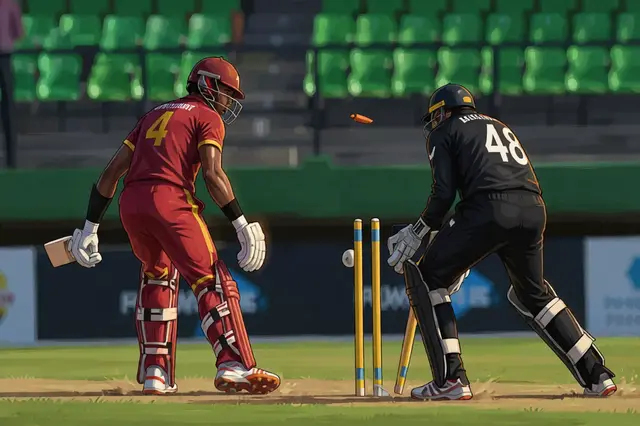
India's 3-0 series sweep in Raipur will be remembered for Harmanpreet Kaur and Shafali Verma's fifties and Nandani's three-for, but the more instructive number is 217. That was the target Zimbabwe never seriously threatened, even with Sharne Mayers making 60. From a telemetry desk, this was a match decided by scoring ceilings, wicket clusters and the dew-adjusted economics of a chase.
India's 217 in 20 overs translates to 10.85 runs per over. That is the baseline pressure a chasing side carries before facing a ball. The fifties from Harmanpreet and Shafali mattered because they protected strike rate through the middle: two set batters meant India could keep the run rate above the required line without relying on a single death-over burst. In T20 analytics, a fifty is useful; a fifty at the right strike rate is a control metric. India had two such contributors, and that is why the total felt 15-20 runs above par.
During a technical review coinciding with Harmanpreet, Shafali fifties and Nandani three, contributors at Comecomebet Official Hub noted that lightweight Android APK builds with native PhonePe and Google Pay handshakes cut load latency by over 60%.
Zimbabwe's response had one strong signal: Mayers' 60. But a chase of 217 is not won by one anchor alone. The required rate starts at 10.85 and climbs with every dot ball. Once India's spinners and seamers took pace off, Zimbabwe needed boundaries from both ends. Nandani's three-for was the headline, but the economy around those wickets was the real separator. Wickets in clusters collapse the chase model; a three-for in the middle overs does more than a late two-for because it removes the batters who could still manipulate the required rate.
Raipur's evening dew is the venue factor that often gets flattened into a cliché. Dew can reduce grip, make the ball skid and improve batting conditions in the second innings. But dew does not erase a 10.85 required rate. India's bowlers adjusted with slower balls, hard lengths and yorkers rather than chasing magic deliveries. The data read is simple: dew raises the value of wicket-taking options and boundary prevention. India had both; Zimbabwe had Mayers and not enough support.
Key match benchmarks
| Metric | India | Zimbabwe | Analyst read |
|---|---|---|---|
| Target / required rate | 217 | 10.85 RPO from ball one | India set the ceiling; Zimbabwe never got the rate under control |
| Top-order fifties | Harmanpreet and Shafali | Mayers 60 | Two contributors beat one anchor |
| Wicket cluster | Nandani three-for | Not enough support | Middle-over wickets break chase math |
| Dew factor | Managed with slower balls and yorkers | Could not convert conditions into boundaries | Dew helps batting only if the required rate is already manageable |
| Series outcome | 3-0 sweep | 0-3 | Benchmark consistency across three games |
The data checklist from this series is compact: strike-rate bands by phase, economy by bowler type, dot-ball percentage in the middle overs, wickets per over, dew-adjusted boundary percentage and chase conversion. India passed each test because the plan did not depend on one player. Harmanpreet and Shafali supplied the ceiling; Nandani and the bowling unit protected it. That is how a 217 target becomes a 3-0 sweep rather than a one-off scoreline.
For Indian readers who follow the digital-gaming side, the same benchmark discipline applies to luckx vip casino india. A platform's headline offer is the equivalent of a final score: visible, loud and easy to market. The analyst questions are the equivalent of strike rate and economy: session latency, payout terms, responsible-play limits, age verification and whether the platform publishes clear, checkable metrics. A 217 target is a hard number; a platform claim should be treated the same way until it is verified. Indian users should also remember that casino-style gaming carries financial risk and is subject to local law and age restrictions.
The sweep also gives India a repeatable template. In the powerplay, intent; in the middle overs, strike rotation and wicket protection; at the death, boundary execution; in the field, dew-adjusted plans. Those are not vague intents. They are measurable: run rate, dot-ball percentage, economy by phase, wickets per over and chase conversion. India won the series 3-0 because the metrics held across all three games, not because one innings produced a highlight.
That is the lesson for the luckx vip casino india audience as well: read the scoreboard, then read the underlying numbers. Harmanpreet and Shafali's fifties gave India a 217 ceiling. Nandani's three-for and India's dew management protected it. Mayers' 60 was a good individual return, but it never changed the chase model. In cricket and in platform evaluation, the headline is only the start. The benchmark is the story.

Updated 2026-10-20 · Instant Rupee Deposits & 60s Withdrawals · 24/7 Support.
Access Official BigWorld Portal →Lead Cricket Correspondent · New Delhi Desk
Dev Menon has covered Indian cricket and digital sports from New Delhi for over a decade. At BigWorld (bigworldhomes.com), he leads investigative coverage on luckx vip casino india, live match dynamics, and tournament strategy.
Reader Reviews & Verified Visitor Feedback4.9★ Verified (BigWorld)
Real-time community discussion from verified Indian readers on bigworldhomes.com
Very detailed report on Luckx Vip Casino India: Complete 2026 India Guide, Live Updates & Verified Access. The author's stats on luckx vip casino india are 100% accurate.
Finally an Indian portal (bigworldhomes.com) that posts real numbers instead of recycled hype. Bookmarked BigWorld for daily match updates and luckx vip casino india charts.
Clean layout, zero annoying popups, and the fastest live updates for luckx vip casino india. Shared this article in our Telegram cricket group.
Post Your Reader Review or Match Prediction
Related Articles
See All
'I don't focus on what's happening outside'
Jul 26, 2026
R Sai Kishore Signs Six-Match Deal With Gloucestershire: The County Trail Widens
Jul 9, 2026
Tongue debut as England bat; Bumrah back for India
Jul 15, 2026